


SCHLIESSEN
Book a design apartment in an industrial monument now.
Book your time off now.


Schleiferei Zwei is more than just a place for temporary living. It is the result of an architectural dialogue with an industrial building that has grown over decades and, after a long period of vacancy, has been given a new perspective. The starting point for the transformation was not a fixed utilisation concept, but rather the question of how a historic site could be revitalised without losing its identity.
The Harz region has always been shaped by its landscape, work and history. The revitalisation of Schleiferei Zwei is an attempt to take a piece of this industrial past further – to preserve a place that gives something back to the local community and at the same time opens up new perspectives on life and work in rural areas.
Existing spatial structures, such as the industrial hall with crane runway, paper-making room, factory flats and turbine hall, were largely preserved and continued. The existing supporting structures and materials such as steel, wood and stone form the basis of all interventions, and the façades were refurbished in line with conservation guidelines. New elements deliberately take a subordinate role and complement the existing structure rather than dominating it.

Schleiferei Zwei underwent renovation between 2021 and 2023 with the aim of preserving as much of the existing structure as possible while creating contemporary spaces. Generous ceiling heights, industrial proportions and technical relics continue to characterise the atmosphere of the ensemble to this day.
The transformation did not involve radical reconstruction, but rather a gradual development: securing, exposing, supplementing. First, the building envelope was stabilised – roof surfaces were repaired, windows were replaced and the facades were upgraded to improve energy efficiency in order to stop further deterioration over another winter. The interior was then carefully refurbished in collaboration with regional craft businesses. This allows the history of the place to remain visible and part of the spatial experience.
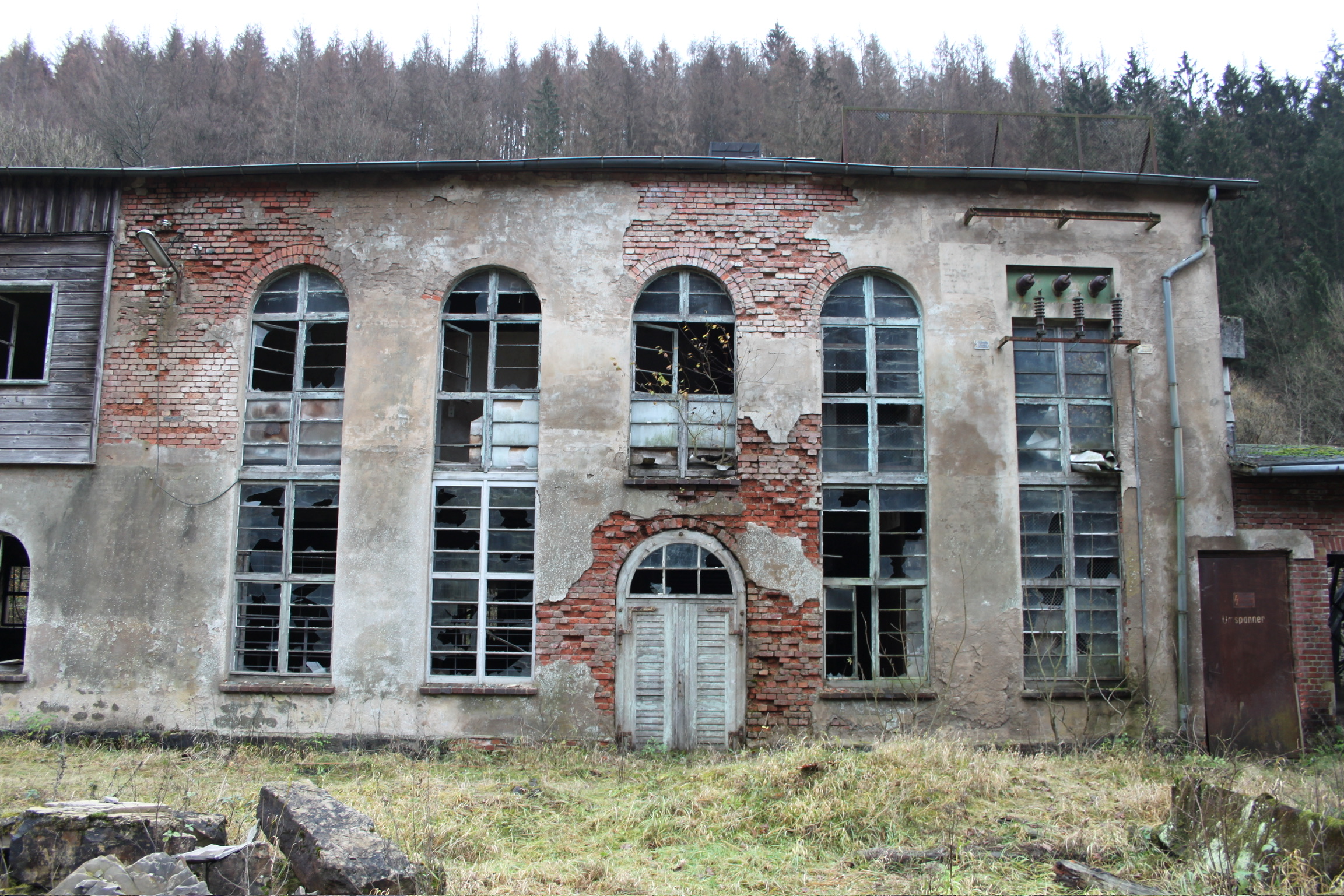
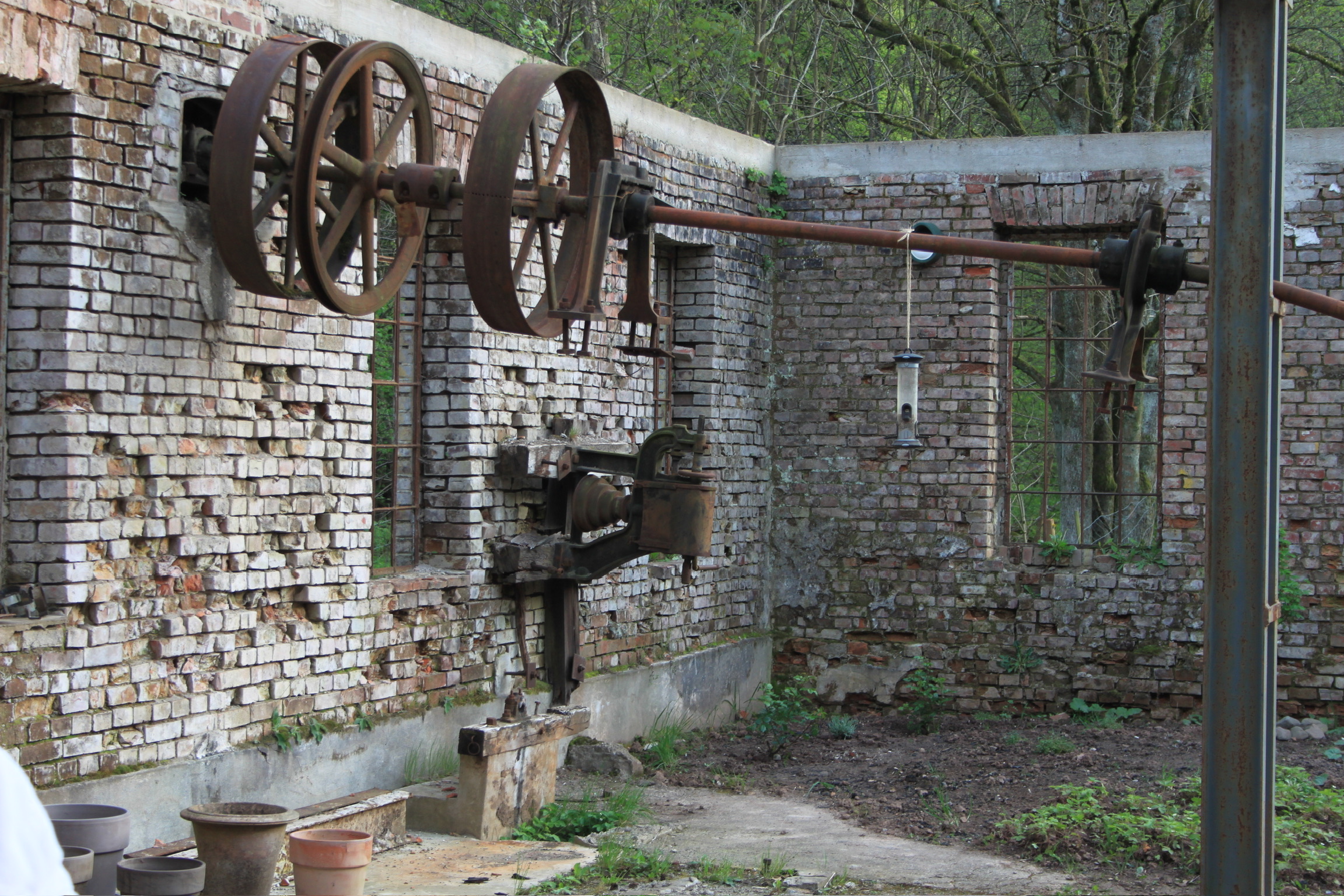

The main building and the historic turbines are protected as listed buildings. The renovation – particularly of the exterior appearance – was carried out in close consultation with the relevant authorities and was based on a respectful approach to the existing structure.
Instead of a museum-like reconstruction, an approach was chosen for the interior that preserves historical elements while allowing for new uses. Additions remain deliberately contemporary, so that old and new remain distinguishable without competing with each other.
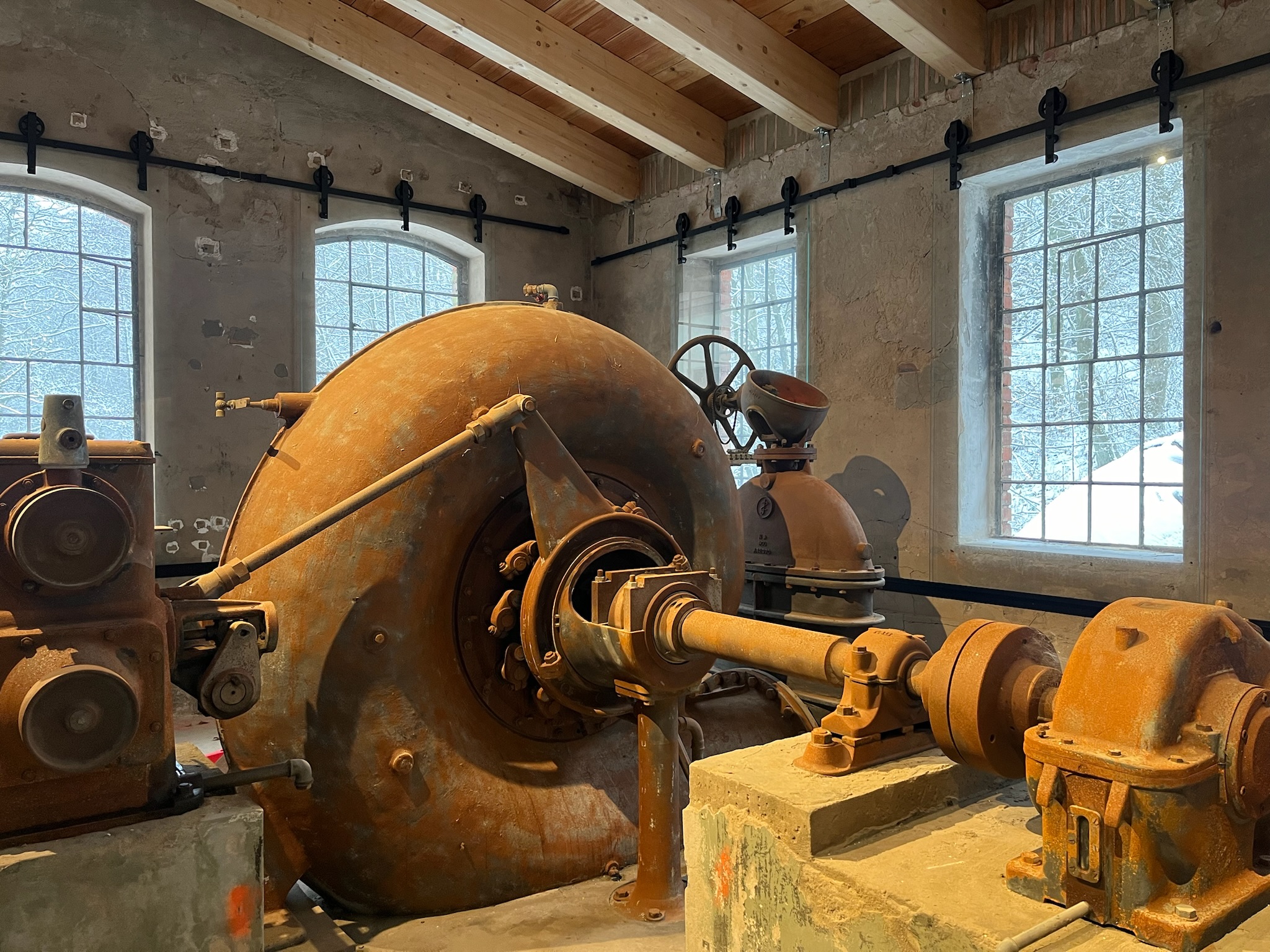
The most important sustainability aspect of Schleiferei Zwei lies in preserving the existing structure, as continuing to build on it has allowed a large part of the grey energy bound up in the building to be retained. Additional measures such as structural improvements, water-saving fittings, a heat pump and photovoltaics support long-term resource-efficient use.
Reuse also plays a central role in the interior design: historical materials, refurbished furniture and existing components have been deliberately integrated in order to reduce resource consumption and keep the history of the place visible.


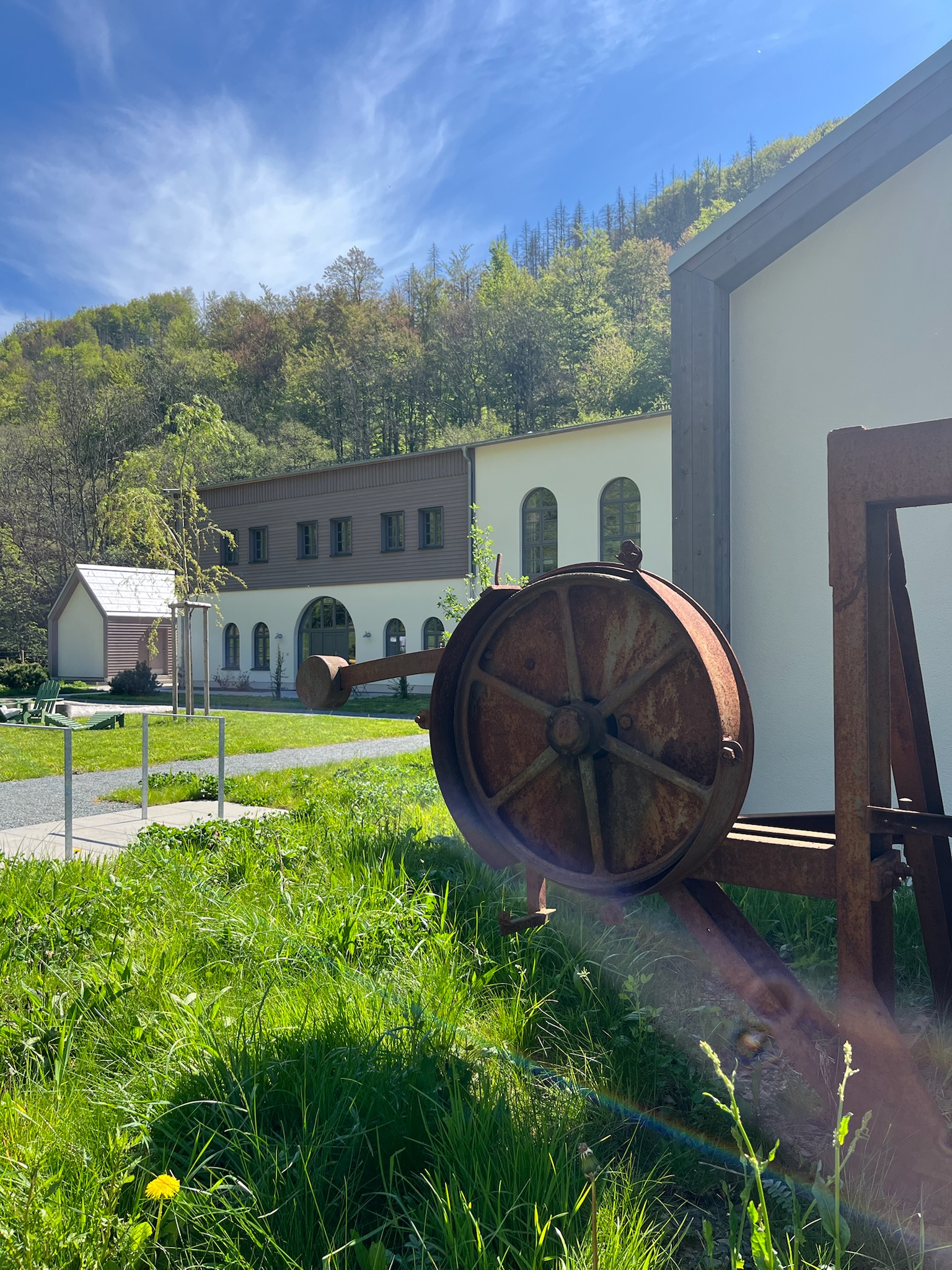
Today, Schleiferei Zwei combines two different ways of spending time – retreat and exchange, living and working, tranquillity and communal use. Former production rooms now serve as open spaces for cultural events, workshops or meetings.
Schleiferei Zwei therefore sees itself not only as a revitalised industrial monument, but also as an example of how historic buildings in rural areas can take on new social functions.
